Making a Difference with CASA of Prince George’s County

We make a real difference in the lives of foster children
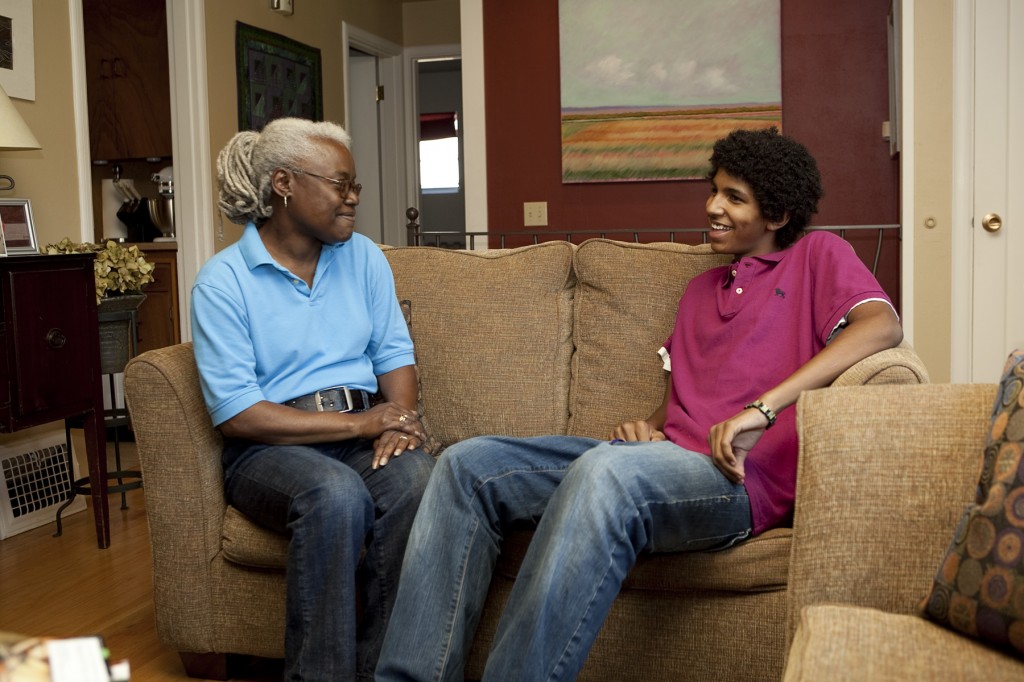
male volunteer and teen

Every month is mentoring month at Court Appointed Special Advocate (CASA)/Prince George’s County, a nonprofit in its 16th year that recruits, trains and supervises CASAs for foster children.

CASAs are volunteers sworn-in by a judge to investigate a foster child’s needs and challenges – from academics to emotional well-being – and then report back their findings and recommendations.

Besides being an advocate, a CASA is a mentor. They are there to talk to the youth about whatever they want to discuss, take them on field trips – such as to a ballgame or an amusement park – and explain to them the importance of becoming a responsible adult.

Studies show that a foster child with a CASA is far more likely to thrive.
kid and adult living roomConsider this: More than half of foster children nationwide drop out of high school, increasing the chances that they will slip into poverty, homelessness and possibly even jail.

Yet upwards of 70 percent of foster children who have been assigned to one of our CASAs graduate, increasing the chances that they will enjoy a full and productive life.

We are proud to say that we make a real difference. We would like to do even more. Our goal is to have one CASA with each foster child. We now have only about 150 volunteers in a county with more than 400 foster children.

Help us celebrate National Mentoring Month by helping us help more foster kids.

#National MentoringMonth (3)

Please keep in mind that these boys and girls are at risk at no fault of their own. They simply were born to parents who, for whatever reason, were unable to care for them. Help us help them!

For more information, please contact CASA/Prince George’s County at 301-209-0491 or email kbundy@pgcasa.org.

Help VA Students Go Back to School!

NO TAXES….on back to school supplies this weekend (8/1 – 8/3) in Virginia! Help students in need get ready for school by adding an extra item to your cart — whether online or in-store — or find an opportunity to help sort & pack up donated supplies so backpacks are full and ready for the first day of school!
Continue reading

7 Questions with Andrew Barnett, Executive Director of SMYAL

June is Pride Month and today we welcome Andrew Barnett, Executive Director of SMYAL (Supporting and Mentoring Youth Advocates and Leaders) to 7 Questions! SMYAL supports and empowers lesbian, gay, bisexual, transgender and questioning (LGBTQ) youth in the Washington, DC metropolitan region through youth leadership development, community service, and advocacy. While working at SMYAL over the past 9 years, Andrew served on the Mayor’s Bullying Prevention Task Force, worked diligently to strengthen in-school GSAs (Gay-Straight Alliance), and developed SMYAL into an influential organization.


1. What motivated you to begin working with your organization?

I first became involved in advocating for lesbian, gay, bisexual, transgender and questioning (LGBTQ) youth when I co-founded a Gay-Straight Alliance (GSA) as a senior in high school. When I graduated college, I knew that I wanted to get more involved in the LGBT movement and I moved to DC to find a way to do that, which led me to an internship at SMYAL. One of the aspects of SMYAL’s work that drew me in was the organization’s focus on addressing intersectional issues. The majority of the youth we serve are African-American and low-income, and so face challenges due not only to their sexual orientation or gender identity but also due to institutionalized racism and economic factors. I greatly valued (and still do!) the way in which SMYAL’s programs incorporated an understanding of how different systems of oppressions impact youth’s lives. As my internship was winding down, a staff position opened up, and I joined the team.

2. What exciting change or innovation is on your mind?

Last year, we teamed up with a California-based organization, GSA Network, to launch a major new initiative: the DC Regional GSA Network. This new effort focuses on empowering LGBTQ youth leaders to organize and promote positive change in their schools and communities through GSA clubs. The program has challenged us to shift our thinking in two major ways: (1) incorporating youth leaders into the program at all levels, including program facilitation, and (2) using a network-based model in which we are not only creating a safe space for LGBTQ youth to be who they are but also working with youth to create affirming spaces wherever they are. As an Executive Director, it’s been exciting to see our youth develop and articulate their own visions for the program, their schools, and their communities.

3. Who inspires you (in the philanthropy world or otherwise)? Do you have a hero?

There are many people who inspire me and whom I admire. In the landscape of LGBT youth organizations, I am particularly inspired by Carolyn Laub, the Executive Director of GSA Network, and Grace Sterling Stowell, the Executive Director of the Boston Alliance of GLBT Youth (BAGLY). I am also a huge admirer of the work of Dr. Caitlin Ryan and the Family Acceptance Project at San Francisco State University.

In addition, what sustains me day to day is the inspiration I take from the people I work with–the SMYAL Board, staff, volunteers, and, most importantly, our LGBTQ youth. I consider myself so fortunate to work with amazing, talented people who are so passionate about the work that we do.

4. What was your most interesting recent project/partnership?

For the past two years, SMYAL has been a member of the Mayor’s Bullying Prevention Task Force here in DC. The Task Force was charged with developing of a model bullying prevention policy and then assisting with its implementation in our schools and other youth-serving providers. I have been so impressed with the way in which the DC Office of Human Rights has spearheaded this effort through engaging a diverse pool of stakeholders (ranging from folks who work at DC Department of Parks and Recreation to the Washington Metropolitan Area Transit Authority) while also keeping us on task and ensuring we adhered to the timetable for speedy implementation. I believe that the model bullying prevention policy that the District adopted is very strong and the ways in which the work is being coordinated across the city will serve as a model for other cities in the future.

5. What is the single greatest challenge that your organization faces (besides finances) and how are you dealing with this challenge?

The greatest challenge we face is probably similar to many other community-based nonprofits, which is that there is always more need than resources. We strive to be strategic in how we develop programs and focus our time in order to ensure that we are able to maximize our impact. Unfortunately, this means that we cannot be everything to everyone and that sometimes we have to say no to opportunities for collaboration and partnership because we just don’t have the bandwidth to take on a new initiative.

6. What advice do you have for other people in your position?

When I first became Executive Director of SMYAL, I took a class at the Center for Nonprofit Advancement for new EDs. The instructor hung a banner at the front of the classroom each session which said, It’s all about relationships. I have reflected back on that banner over the years and I have to say I think it is true–as EDs, the relationships we build with our Board members, staff members, community stakeholders, and constituents are central to our ability to do our jobs. Another piece of advice I would offer is never to be afraid to ask for help when you need it.

7. What’s next/coming up for you or your organization?

This year is an exciting one for SMYAL–we are celebrating our 30th Anniversary! To commemorate this milestone, we have been recording the history of SMYAL through our alums–former youth participants, Board members, volunteers, and staff. We just released a publication, 30 Years of SMYAL Stories, that collects several of these interviews and will be putting out a podcast later in the year. Programmatically, we are continuing to build our DC Regional GSA Network and preparing for the second school year of implementation.

A major change for me is that I will be stepping down from SMYAL in August to pursue a Ph.D. in clinical psychology at the George Washington University. It is certainly bittersweet, as I will be very sad to leave this organization that has meant so much to me since I joined the staff 9 years ago. However, I am excited to see how SMYAL continues to grow in the years to come. The Board is in the midst of a search for the next Executive Director, so I would encourage anyone who is interested to apply!

Guest Post: LearnServe International

On the eve of the 5th Annual LearnServe Venture Fair, we welcome Scott Rechler, CEO and Director of LearnServe International to GoodWorks! LearnServe International’s program prepares students in greater DC to be the next generation of global leaders and social entrepreneurs. Their Fellows Program brings together over 70 high school students from 30 public, private and charter schools to learn how to bring sustainable social change to their communities. Over an academic year, students design and launch their own social ventures — action projects to benefit their schools and communities — while learning core business entrepreneurship skills, including budgeting, strategic planning, and team-building.

Can you really teach social innovation?

by Scott Rechler, CEO & Director, LearnServe International


Could the next Jamila Larson, Mazi Mutafa, or Robert Egger be sitting in class right now in the District, Maryland, or Virginia?

Maybe.

In a March Washington Post article, J. D. Harrison opened his article titled “Can you really teach entrepreneurship?” with a similar question, but a different cast of characters: Steve Jobs. Mark Zuckerberg.

Toss in Bill Gates, and you’ve got the three examples of entrepreneurs referenced by every high school group I speak with. And for good reason. All three have built successful companies whose products shape our daily lives, and a personal brand that complements their corporate identities.

Ask a room full of high school students for examples of social entrepreneurs? Uncomfortable silence.

We are surrounded by powerful examples of social entrepreneurs here in the DC region. But they’re not (yet) household names — unless you happen to spend time with their organizations.

Take for example Jamila Larson, founder of the Homeless Children’s Playtime Project, which brings much-needed recreation to kids living in shelters. Or Mazi Mutafa, founder of Words Beats & Life, giving young people a voice through hip-hop. Or Robert Egger, founder of DC Central Kitchen — and of C Forward, an initiative to raise the profile of the non-profit sector nation-wide.

The next Steve Jobs or Mark Zuckerberg may well be sitting in a DC classroom today, preparing to launch the next breakthrough technology or scalable business. And sitting right next to her is the next Jamila, Mazi, and Robert.

LearnServe is committed to inspiring and training the rising generation of social entrepreneurs. These are the young people who know they want to do something good in the world — but may not yet know what or how. We help them blend this passion with the tenacity, vision, and technical skills essential to entrepreneurship in order to transform the lives of their classmates, neighbors, and communities.

Tricia Granata, executive director of the Network for Teaching Entrepreneurship in DC, reflected in Harrison’s article on the “innate entrepreneurial spirit” of young people, and the importance of helping them develop the accompanying technical skills.

LearnServe offers an outlet for our students to channel this innate entrepreneurial spirit and build those technical skills — coupled with a powerful dose of empathy and social insight.

LearnServe alumni have gone on to launch companies introducing fair trade coffee to China, and improving hygiene in India through the sale of sustainable soaps in the U.S. They have created lasting organizations teaching foreign languages to elementary school students, and science to middle schoolers. Yasmine Arrington, a LearnServe and DCPS alum and founder of ScholarCHIPS, was awarded the Washington Women of Excellence Award for Community Service earlier this month for her work raising college scholarship funds for children of incarcerated parents.

Tomorrow, 70 more young social entrepreneurs will “pitch” their social venture plans to a panel of business and community leaders at LearnServe’s 5th Annual Venture Fair and top projects will receive seed funding to help get their ideas off the ground. We invite you to join in celebrating their creative spirit and vision for our community. These are our region’s rising generation of social innovators.

Harrison concludes his article with a quote from Wendy E. F. Torrance, director of entrepreneurship at the Kauffman Foundation: “No matter what career they choose, it’s important for young people to look at the world through the lens of an entrepreneur.”

We couldn’t agree more — and we are working to ensure that lens is wide enough and community-oriented enough to include Jamila, Mazi, Robert and Yasmine, alongside Steve Jobs and Mark Zuckerberg.

To learn more about LearnServe International and their Fellows Program, visit them online at: www.learn-serve.org. Meet the Fellows at the 5th Annual Venture Fair tomorrow (4/24) or get involved here!

Guest Post: Mentoring Today

As Mentoring Month draws to a close, we’re excited for today’s guest post from Mentoring Today! Since 2005, Mentoring Today has served DC youth both before and after they are released from incarceration to support their successful reintegration into their families and community. Advocates and mentors from the Washington College of Law help youth with critical issues such as education, employment, and housing as they enter adulthood. Through these comprehensive, client-centered services, Mentoring Today strives to improve the juvenile justice system and empowers our young people to recognize their dreams and realize their aspirations.

About the Author: Sasha Garcon is a third year law student at American University’s Washington College of Law. Sasha is currently interning with Mentoring Today and hopes to pursue a career in juvenile defense.

A Mentor, An Advocate, And All That Is In Between

by Sasha Garcon

I have been a mentor in the past. And as a law student, I am developing skills to become a better advocate. But rarely have these two roles merged, until I started working with Mentoring Today. Mentoring Today is a DC-based organization that serves youth both before and after they are released from incarceration to support their successful reintegration into their families and community. Mentoring Today, through a partnership with Students United, a student organization at American University Washington College of Law, sends mentors to meet weekly with incarcerated youth at New Beginnings Youth Development Center in Laurel, Maryland. Once the youth are released, mentors continue working with the youth in the community by maintaining a mentoring relationship and by helping with critical issues such as education, employment, and housing.

“What is a mentor?” I asked my mentee on the first day we met. He explained to me that he had had a mentor before and that this individual gave him advice on life and staying out of trouble. I thought about this a little more and thought about how I wanted to define my role and my relationship with him. I knew that I was not there to tell him what to do and what not to do. My role, as I saw it, was to be a support to my mentee — to help him define goals and to help him in accomplishing those goals. While I wanted to provide emotional support and advice on how my mentee could grow as an individual, I also wanted to make sure that I fought for things that my mentee wanted or needed to grow as an individual. I wanted to be more than a mentor; I wanted to also be his advocate.

The idea of being both a mentor and an advocate may seem foreign but they work quite well together. I could see change in our relationship the first time I shifted from my role as a mentor to being an advocate for my mentee. My mentee had what is called a “Youth Family Team Meeting” (YFTM) meeting scheduled. At this meeting, New Beginnings staff members, service providers, and family members came together to prepare for my mentee’s release and to discuss what services needed to be set in place once he was in the community. In preparation for the meeting, I discussed with my mentee what to expect. We talked about his goals, what he hoped to accomplish in the meeting, and any issues that he wanted to raise. I reassured him that I would also be there at the meeting on his behalf to help make sure his goals were met and that he accomplished what he wanted to accomplish. As I said this, he stopped and looked at me with a look that I can only describe as pure shock. “What? You didn’t expect me to come?” I asked. His answer, “No.”

After this meeting, I could see how my role as a mentor-advocate shaped and defined my relationship with my mentee. It was encouraging to see that he was not only comfortable sharing his goals with me but also wanted to include me in his pursuit of accomplishing those goals. I had the ability to not only advocate on his behalf, but also to help him learn to advocate for himself. One cannot truly advocate for someone, if they do not teach them to advocate for themselves. It is the assurance that I will not only advocate for him as best I can, but that I will also provide him with the confidence to advocate for his own needs that I believe will truly make a difference in my mentee’s life.

Learn more about Mentoring Today at: www.mentoringtoday.org, or check out their Catalogue webpage for more ways to get involved.

Guest Post: Washington Youth Garden

Today we welcome the Washington Youth Garden to GoodWorks! Using the garden cycle as a tool to enrich science learning, inspire environmental stewardship and cultivate healthy food choices http://iga.edu/best-paper-writing-service-essay/ in youth and families, the Washington Youth Garden is in its 40th year to service to local youth and families.

Today’s post is from Mel Jones, the Science, Technology, Engineering and Math (STEM) Coordinator at John Burroughs Education Campus. Gardening is hard work. So is being a public school teacher. It’s no surprise then that school gardens are such an uphill battle for DC teachers and administrators. This letter from one of the Washington Youth Garden’s partner schools helps show why partnerships are so valuable.

Growing Green Dreams at Local Schools

by Mel JonesDisplaying Mel Watering.jpg

Since beginning as a science teacher here over ten years ago, I have made repeated attempts to start a garden. I knew my students would have a better understanding of science if there was more hands-on learning. However, despite my efforts, I didn’t have the expertise or the time to develop a real, working garden.

In 2011, our partnership with the Washington Youth Garden made the dream of a school garden come alive as third graders filled new raised beds with soil and transplanted lettuce, which they later harvested for salad pitas. Since then, the garden has become a part of every student’s experience, from compost investigation projects to school-wide sweet potato tastings.

The garden continues to expose students to new fruits and vegetables and provide an outdoor science laboratory. With grant funding, we’ve hired a School Garden Coordinator who regularly teaches our Early Childhood classes and collaborates with teachers to integrate the garden into science and literacy lessons. Plans are in progress to install a kitchen classroom to give our students year-round opportunities to cook healthy foods and learn about science and nutrition. The Washington Youth Garden has made a truly wonderful difference for our students and our school!

How does the Washington Youth Garden support school gardens?
The Washington Youth Garden provides multi-stage school garden partnerships that help schools integrate their school garden into the curriculum, teach garden-instruction best practices, seek independent funding, and plan for long-term sustainability. Currently, we support thriving school garden programs at four low-income partner schools in Ward 5.

How can you support this?
A pledge of $500 supports the cost of closely collaborating with a teacher to deliver four hands-on, curriculum-aligned garden lessons.

Learn more about the Washington Youth Garden on their website, blog, Facebook page and current Indiegogo Online Fundraiser.

Guest Post: LearnServe International

Today’s post comes from LearnServe International, whose programs spark high school students’ passion to make a difference and equips them with the knowledge, tools, and relationships to effectively drive local solutions to pressing global challenges. Bringing together students from across the DC area, LearnServe prepares them with the skills of business leadership, innovative problem-solving, and cross-cultural fluency. Then students are challenged to lead community-based change in their schools, across the DC region, and around the world.Empowering high-schoolers who have the motivation to make a difference, the Fellows Program guides them through the creation of their own “social venture.”

LearnServe Fellows Prepare to Speak Out

by Scott Rechler, Director & CEO, LearnServe International

When is the last time you saw someone teased, harassed, or picked on simply because of who they are? Did you recognize it as bullying? Stand up to the perpetrator? Console the person these attacks were directed towards?

Madison and Alichea, both students at Parkdale High School in Prince George’s County, ask these questions every day. Both Madison and Alichea have seen bullying first-hand. And both are ready to do something about it.

In September we challenged Madison, Alichea, and the other 70 members of the 2014 class of LearnServe Fellows to articulate the injustices they witness or experience, that they would like to put an end to. As LearnServe Fellows, Madison and Alichea and their peers will spend the year developing business plans around their respective causes, then mobilize teams to get these “social ventures” off the ground.

Madison herself has been bullied. She knows the sting of teasing and intimidation, which she has endured for more than a year. She appreciates all that her school — through counseling and peer mediation — has done to address the problem. But she feels that students can also do more to support their classmates who have been targets of bullying.

Madison plans to create a peer-to-peer support network for targets of bullying and their allies. With additional guidance from the school’s counselor, students would support each other in working through some of the emotional effects of bullying.

Alichea, a member of Parkdale’s JROTC squad, sees it as her responsibility to intervene when she sees other classmates being bullied. She wonders why more students don’t step in. Do they see it all as a harmless joke? None of their business? They’re too afraid to respond? Or they simply don’t know what bullying looks like – and feels like – in all the forms it can take?

Alichea would like to help would-be bullies and would-be bystanders better understand what bullying is and why it must stop. Through school outreach she hopes to shed light on bullying at her school and build a network of allies ready to step in and stop it as it happens.

Each year, the LearnServe Fellows Program offers leadership and social entrepreneurship training to 70 high school students like Madison and Alichea – students who represent more than 30 public, private, and charter schools in DC, Maryland, and Virginia. LearnServe guides these students as they translate the causes they are most passionate about into community impact.

LearnServe invites you to meet Madison, Alichea, and the other members of the 2014 class of LearnServe Fellows as they debut their social venture ideas at the 7th Annual Innovators Coffee House, tomorrow, December 12, 2013. The LearnServe Fellows will offer a series of 30-second “elevator pitches” on the causes they have chosen to address and the solutions they plan to design and implement this spring.

For more information about the LearnServe Fellows Program visit www.learn-serve.org/fellows.

For details or to RSVP for the 7th Annual Innovators Coffee House, visit http://learn-serve.org/learnserve-fellows-events/.

Guest Post: The Barker Foundation

November is National Adoption Month! Today we’re excited to have a guest post from The Barker Foundation, whose mission is to serve all members of the adoption circle – birth parents, adoptive parents, adopted persons, and anyone whose life is touched by adoption. A licensed adoption agency serving DC, Maryland and Virginia, The Barker Foundation supports teens and women as they consider an adoption plan, places infants and children with carefully selected, local adoptive families, and provides lifelong support and education to all adopted persons.

Reflections by Beverly Clarke

Director, Project Wait No Longer

I have 9 year old twins who are full of questions, and we are always discussing new words and looking up definitions on-line. Recently, we were looking up the definition for the word “inspiration.” There were many definitions, but the ones that I felt most drawn to were “divine influence exerted directly on the mind and soul of humankind” or “to spur on, impel, energize or motivate.” My kids began making up sentences based on this new found understanding of the word and all the things that are “inspirational” in the life of a 9 year old. My favorites were “I am inspired to eat my broccoli so that I can have a brownie,” or “I am inspired to read three books so that I can watch an episode of Scooby-Doo.” Listening to them was entertaining but also got me thinking about what inspires me.

I realized that I am fortunate to feel inspired on a daily basis while working with Project Wait No Longer, Barker’s older child adoption program. I am inspired by the children and teenagers that still have the audacity to hope for a forever family even after surviving years of abuse and neglect at the hands of adults. I am amazed when I see them begin to break down their protective walls, change their behaviors, and develop trust for the members of their new families. I am inspired by the parents who come to our program, determined to provide loving and stable homes for older children who oftentimes don’t know how to be a part of a family – by the families that stick it out, even when the going gets unbearably tough.

This is what drives me to work harder every day to find placements for older children who are often languishing within the foster care system. The needs of the children weigh on my mind and soul, inspiring me and the amazing team in PWNL to be a part of the solution.

Recently, I had the pleasure of helping to facilitate the placement of a little guy (Bobby) who is 10 years old into the home of Sue and John. Bobby has been doing really well with his new family, but has come from a long history of being rejected by former caretakers, so making the leap to calling Sue and John “mom” and “dad” has been really hard. Last week my phone rang, and John was on the line. I was surprised to hear from him because Sue (the more emotional one of the pair) is usually the one who calls me. In a very excited voice, John said to me, “Bev, something pretty cool happened. Bobby was talking about me to one of his friends, and I overheard him call me “dad.” This is the first time he has ever done that! Isn’t that great?” Through the phone I could hear the pride, joy and excitement in John’s voice. After several months of patient and consistent love, his son has begun to claim him as “dad.” This is what we work for at Barker. These are the true moments of inspiration.

Beverly Clarke, LCSW-C, LICSW is the Director of Project Wait No Longer at the Barker Foundation. For more information on our work, visit us at: www.barkerfoundation.org.


Around Town 11/1-11/7

Happy November! Catalogue nonprofits are kicking off the month right with lots of great events all around the area. Let us know if you are heading to one (and you never know, you might even see us there!). Don’t have time to get out to an event? Request a copy of our brand new catalogue (out on November 1st!) and get to know our new class of nonprofits!
Continue reading

Guest Post: Girls on the Run

Today’s post comes from Girls on the Run – DC whose program teaches over 2,000 girls in DC’s eight wards about self-esteem and healthy living through running.

by Kelsey Lyle, Program Coordinator GOTR-DC

“My daughter, who usually complains about walking even a few blocks, came home last week after running almost 2 miles and was so energized and proud of herself that she asked to run around our block a few times. Running a 5K seemed impossible to her when she started, but now she’s figured out that she can run further and longer than she ever knew. I’m looking forward to an improved outlook on fitness, which I hope will serve her throughout her life.” – Dawn, GOTR-DC Parent of 3rd Grader

This is one of many stories that parents of Girls on the Run DC participants can tell. Girls on the Run DC is an afterschool program that inspires girls to be joyful, healthy and confident using a fun, experience-based curriculum which creatively integrates running. The program takes place over the course of 10 weeks and concludes with a 5k event to celebrate the hard work and accomplishments of the girls in the program.

Our volunteer coaches are the key ingredient to our success as an organization. Volunteer coaches empower girls to appreciate who they are and encourage them to take on a healthy lifestyle. They are what make the program happen- a role that is a blend of teacher, mentor, and friend. Each practice session offers a lesson on topics that include peer pressure, self-esteem, cooperation, and more. In addition to running during practice, the girls are asked to give a thoughtful reflection to the topic of the day. At the end of the program, each team creates and completes a community service project.

This Fall season Girls on the Run DC is in more than 50 schools and has over 70 Girls on the Run teams. Each year we serve over 2,000 girls in the DC metropolitan area. Approximately 60% of our sites receive scholarships, and we, as an organization, fundraise on their behalf.

We rely on volunteers to assist with many different aspects of our organization. We need over 200 volunteers to make our November 24th race day possible. If you would like to help out with Girls on the Run 5K as a race day volunteer please sign up on our website: http://www.gotrdc.org/get-involved/volunteer.

Find out more about Girls on the Run DC at our website, or Like us on Facebook!

photo: Emily Weiss (emilyweissphotography.com)